 Foshan Shengduan Door Industry Co., Ltd.
Focus on intelligent travel management equipment, one-stop service experts
Foshan Shengduan Door Industry Co., Ltd.
Focus on intelligent travel management equipment, one-stop service experts
Consultation Hotline: 18029207774
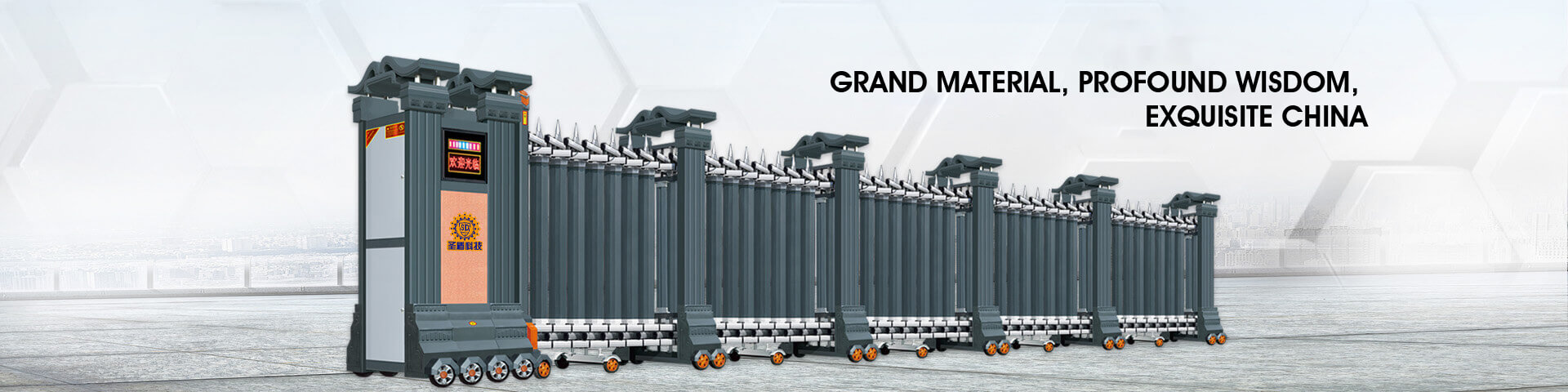
What are the issues to pay attention to during the running-in period of the electric sliding door?
1. Check the wear condition of components: The newly processed and assembled components of the electric telescopic door have deviations in geometric shape and mating dimensions. In the initial stage of use, due to the impact, vibration, and other alternating loads, as well as the influence of heat and deformation, along with the rapid wear, the equipment is prone to malfunction.
2. Familiarize with the operation procedures: For novice operators of the electric telescopic door, they may not be familiar with the equipment or understand the operation methods. They are prone to operational errors and cause malfunctions, or even mechanical accidents. Operators in this field must patiently study and be trained to be qualified before they can start working. Problems that occur during the running-in period must be promptly contacted with the manufacturer, and the wear condition should be observed to prevent major accidents and incidents.
3. Do a good job in lubrication: Poor lubrication conditions of the electric telescopic door can also cause the mating clearance of components to be smaller, and due to assembly reasons, it is difficult to ensure the uniformity of the mating clearance. The lubricating oil (grease) is not easy to form a uniform oil film on the friction surface to prevent wear. As a result, the lubrication efficiency is reduced, and early abnormal wear of components occurs. In severe cases, it can cause scratches or biting phenomena on the friction surfaces of precise components, leading to equipment failure.
4. Check the noise level: During the running-in period of the electric telescopic door, if the noise of the equipment increases, it indicates that the equipment quality is deteriorating. Therefore, noise checks must be done well, and problems should be reported to the manufacturer in a timely manner for prompt handling.
5. Regularly check if the components are loose: Due to the loosening of components, vibration, and the influence of heat on the machine, leakage phenomena will occur at the sealing surfaces and pipe joints of the machine; some casting and processing defects are difficult to be discovered during assembly and debugging, but due to the vibration and impact during the operation process, these defects are exposed, manifested as leakage (seepage) of oil (water). Therefore, leakage phenomena are prone to occur during the running-in period.
Company telephone:0757-87572578
E-mail:2483999500@qq.com
Address:Dengjia Village Industrial Zone, Nan'an, Xishan Subdistrict, Sanshui District, Foshan City
Service Hotline 18029207774

Copyright © 2019 Foshan Shengdun Door Industry Co., Ltd