 Foshan Shengduan Door Industry Co., Ltd.
Focus on intelligent travel management equipment, one-stop service experts
Foshan Shengduan Door Industry Co., Ltd.
Focus on intelligent travel management equipment, one-stop service experts
Consultation Hotline: 18029207774
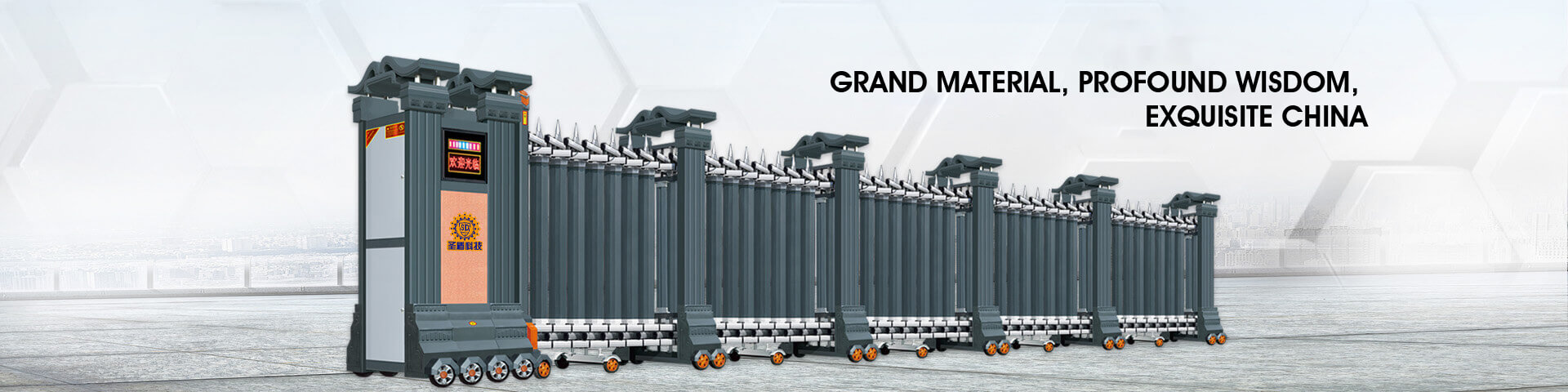
The current situation and shortcomings of the Chinese electric sliding door manufacturing industry
The current situation and shortcomings of the Chinese electric sliding door manufacturing industry. After several decades of development, the electric sliding door manufacturing industry in our country has made significant progress, but there are still many problems and deficiencies.
First of all: There is still an overcapacity issue, and the effective supply is significantly insufficient.
Over the past 10 years, the annual growth rate of fixed asset investment in China has consistently remained above 20%, a rate that is far beyond the reach of other countries around the world. The large-scale investment has driven the rapid development of the domestic economy and also accumulated considerable production capacity, leading to a phenomenon of overcapacity. Currently, the average capacity utilization rate of China's manufacturing industry is only about 60%, which is lower than the current industrial utilization rate of 78.9% in developed countries such as the United States, and also lower than the global average of 71.6%. Among the 24 major industries in China, 22 of them suffer from severe overcapacity.
Our country has established a complete industrial system and has strong industrial supporting capabilities. Among the over 500 major industrial products listed by the United Nations, 220 of them rank first in the world in terms of production volume. However, in key core technologies, even in terms of product quality and reliability levels, there is still a significant gap compared with the world's manufacturing powerhouses. On one hand, products are difficult to meet effective demand; on the other hand, there is a large amount of homogeneity and overcapacity in the industry.
In China, the electric sliding door manufacturing industry has been experiencing continuous expansion in its industrial scale, but the problem of overcapacity remains prominent, becoming the main factor restricting the development of the industry. The overcapacity issue mainly stems from the contradiction between insufficient product structure and excessive structural supply. Its prominent manifestation is as follows: The product structure is mainly composed of mid-range and general types, with a relatively low proportion of high-end and specialized products. The stability of product quality still has a certain gap compared to that of developed countries.
On one hand, there is an oversupply of low-end products with production exceeding demand. On the other hand, there is a shortage of high-end products with demand outstripping supply. After China entered the ranks of middle-income countries, the public's demand for consumer goods is undergoing a transformation and upgrading. Their consumption demands are shifting from "having" to "excellence", and from basic needs to a moderately prosperous lifestyle. When the huge industrial scale cannot fully match the massive consumer group, there will be a situation where on one hand, there is an oversupply of low-end products, and on the other hand, consumers seeking high-end quality products are flowing abroad. The quality and variety of products cannot meet consumers' demands for green, low-carbon, brand, fashion, as well as individualized and diversified products.
The outdated production capacity has high material and energy consumption, generates large amounts of pollution, seriously damaging the ecological environment. The safety production conditions are poor, the product quality is unreliable, leaving great potential risks for people's lives and property. It does not meet the requirements of ecological civilization construction and should be eliminated in accordance with the law. We need to strengthen quality rectification, eliminate outdated production capacity and resolve excess capacity. We should strictly implement the production license and other industry access systems in high-energy consumption and high-pollution industries, and eliminate outdated production capacity and resolve excess capacity in accordance with standards.
Secondly: Constraints on resources and the environment are becoming tighter, and the pressure for energy conservation and emission reduction is increasing.
Electric sliding door manufacturers - Trends in the electric sliding door industry
Currently, the resources, energy, ecological environment and factor costs in the development of China's manufacturing industry are all undergoing dynamic changes. From the perspective of resources and energy, China has relatively insufficient resources and a weak environmental carrying capacity.
Overall, the electric sliding door manufacturing industry in our country has not yet shaken off the development mode of high investment, high consumption and high emissions. It consumes a large amount of resources and energy, and the ecological environment problems are quite prominent. The situation is still very serious and it is urgent to accelerate the construction of a green manufacturing system with high technological content, low resource consumption and less environmental pollution. The energy consumption of the electric sliding door manufacturing industry ranks second only to metallurgy and petrochemicals, and it is the third among industrial sectors. The emissions of sulfur dioxide, nitrogen oxides, carbon dioxide and smoke dust from the electric sliding door manufacturing industry are all at the forefront of the national industrial system. The processing industries with low energy consumption, low emissions and high added value have not yet become the main body. The industry lacks technological research and development and innovation capabilities in energy conservation and emission reduction, which greatly restricts the process and effect of energy conservation and emission reduction. Many enterprises have not met the standards. Facing environmental pollution, the pressure of energy conservation, emission reduction and structural adjustment has increased.
With the acceleration of industrialization and urbanization as well as the continuous upgrading of consumption structure, China's energy demand is experiencing a rigid growth. The issue of resources and the environment remains one of the bottlenecks restricting the development of China's economy and society. Energy conservation and emission reduction still face a severe situation and arduous tasks.
Accelerating green, circular and low-carbon development, promoting ecological civilization construction, will alleviate the constraints of resource and environment, accelerate the transformation of economic development mode, improve the quality and efficiency of development, and enhance the sustainability of development. Currently, China's environmental carrying capacity is approaching its limit. We must promote the formation of a new way of green, low-carbon and circular development, and with greater efforts, promote the application of green electric telescopic door manufacturers, making it the focus of industry structural adjustment and transformation and development.
Once again: The industrial concentration is not high, and the market environment needs to be improved.
Electric telescopic door manufacturers - The development of electric telescopic door manufacturers industry
In China, there are a large number of electric sliding door manufacturing enterprises with an average small scale. The industry concentration is low. Some enterprises have engaged in blind expansion, which has further led to overcapacity and disorderly market competition. The market environment needs to be improved.
The low concentration of industries ultimately led to market chaos and the violation of market competition order. The total amount of pollutants emitted by the electric sliding door manufacturers industry is relatively large, and it is a key area for environmental protection law enforcement. Some large enterprises, in order to reduce the emission of atmospheric pollutants, have adopted clean energy through technological transformation and equipped with environmental protection facilities such as denitrification and dust removal, which has increased production costs.
Some small enterprises have not equipped themselves with proper environmental protection facilities and have not been punished, resulting in unfair competition. Due to the small scale of the enterprises, weak brand influence, serious product homogeneity, similar business models and advertising activities, the industry has seen a continuous proliferation of counterfeit and substandard products, excessive formaldehyde content in products, frequent quality and safety issues, outdated industry standards, and a serious phenomenon of "copying well-known brands", among other problems. Moreover, due to inadequate market supervision, some unlicensed production and counterfeit products have also entered the market.
Low-price cutthroat competition has seriously threatened the healthy development of the industry and has become the biggest problem hindering the development of enterprises. Taking the artificial stone industry as an example, in recent years, with the continuous increase in the demand for artificial stone, the investment in artificial stone has grown rapidly. The short-term low-level repetitive construction has led to a sharp increase in the number of enterprises and production capacity, resulting in serious product homogeneity. Many enterprises simply lower the quality of their products and offer low-priced inferior products to compete for the market. This has caused the artificial stone products on the market to be of varying quality, resulting in a significant decline in the overall industry efficiency and a serious damage to the market confidence in artificial stone products. The artificial stone that previously occupied the main share of the kitchen countertop market has completely withdrawn. With the popularity of artificial quartz stone countertops, the artificial quartz stone industry is also facing the same severe market chaos.
Once again: Insufficient independent innovation capabilities, and the development of emerging industries is not rapid.
Electric sliding door manufacturers - Trends in the electric sliding door industry
Currently, a new round of technological revolution and industrial transformation is accelerating globally. Major disruptive innovations are constantly emerging and creating new products, new demands, and new business models, providing unprecedented driving forces for economic development and promoting profound adjustments in the economic landscape and industrial forms. This has become the key to driving development and enhancing national competitiveness. China not only enjoys a rare historical opportunity to catch up and leap forward, but also faces the risk of further widening the gap. Only by truly enhancing the sense of crisis and concern, and striving to make new deployments and achieve new breakthroughs in innovation-driven development, can we keep up with the global development trend and seize the initiative in development.
Currently, the average degree of our country's reliance on foreign technology is over 50%, which is significantly different from the levels of 30% or less in most developed countries, and 5% or less in the United States and Japan. The reason for this is that the lack of innovation capabilities and the difficulty in converting scientific and technological achievements into actual productive forces coexist simultaneously, resulting in a low rate of self-sufficiency for core technologies and key technologies in our country.
On one hand, the intensity of R&D investment (2.09%) is significantly lower than that of innovative countries (3% - 5%). Moreover, there are fragmented and isolated, overlapping and repetitive phenomena in various fields, departments and aspects of scientific and technological innovation activities. On the other hand, for many years, our country has been plagued by the chronic problem of poor and inefficient conversion of scientific and technological achievements into real productive forces. There are numerous institutional and mechanism obstacles in the scientific and technological innovation chain, with a separation between industry, academia, research and application, and insufficient tight connection between innovation and transformation at all stages. Due to the lack of core technologies, many high-end products cannot be independently guaranteed and are heavily dependent on imports.
In terms of creating new industries and leading future development, our technological reserves still need to be strengthened, and there is a severe shortage of high-end talents. The situation where key core technologies are subject to foreign control has not been fundamentally resolved. Many industries are still at the middle and lower levels of the global value chain, and deep-seated institutional and ideological obstacles that hinder innovation-driven development still exist. The development pace of emerging industries is slow, and there is a lack of technological research and development and reserves. In the industry, the output value of strategic emerging industries, which belong to the strategic emerging industries, only accounts for about 10% of the total output value of the entire industry. The overall scale is small and the industrialization process is slow. The development of inorganic non-metallic new materials and non-metallic mineral deep processing is relatively slow; although the processing and manufacturing industry is developing rapidly, most of them are still at the low-end of the value chain and in a passive subordinate position.
The lack of R&D capabilities and insufficient R&D investment have hindered the improvement of the product innovation ability and core competitiveness of the electric sliding door manufacturers.
Once again: The integration of informatization and industrialization still needs to be strengthened, and intelligent manufacturing urgently requires improvement.
Electric telescopic door manufacturers - The development of electric telescopic door manufacturers industry
Currently, a new round of technological revolution led by information technology is in full swing, and the Internet is increasingly becoming the leading force for innovation-driven development. Information technology is intersecting and integrating with biotechnology, new energy technology, and new material technology, which is triggering a group of technological breakthroughs characterized by green, intelligent, and ubiquitous features. Information, capital, technology, and talents are accelerating their flow globally. The Internet is driving industrial transformation and promoting the transition from industrial economy to information economy. A new international division of labor system is taking shape. Developed countries are continuously promoting technological innovation in information technology and accelerating the digitalization process of their economies, striving to consolidate their leading advantages. Developing countries are seizing the opportunities of industrial restructuring and adjustment, promoting transformation through informatization, and actively seeking to grasp the initiative in development.
Although our country has achieved remarkable progress in informatization construction, the development of information infrastructure and the level of application still lag behind those of developed countries.
Enterprises' willingness to utilize information technology to transform traditional production methods and processes is relatively low. Most regions and industries are still at the stage of primary or partial application. Moreover, there are significant differences in informationization levels among different regions, industries, and enterprises of different scales. High-end core industrial software related to national economic and social security is mainly imported, and there is a serious shortage of talent reserves in fields related to informationization and information security.
At present, developed countries and regions have begun to enter a new stage of comprehensive integration of manufacturing and information technology, characterized by digital and networked applications. For instance, Germany's manufacturing level and informationization development level are world-leading, and it has already initiated the Industrial 4.0 strategy. According to Germany's classification standards, the overall level of Chinese industrial enterprises is at level 2.0, and they need to bridge the gap from Industrial 2.0 to 3.0 in order to achieve the development direction of 4.0. We should accelerate the integration of new-generation information technology and manufacturing technology, take intelligent manufacturing as the main direction for the deep integration of industrialization and informatization, and comprehensively enhance the intelligence level of enterprises in research and development, production, management and services, promoting the transformation of China's manufacturing model from "Made in China" to "Created in China".
Once again: The talent advantage remains untapped, and the cost of factors is still relatively high.
Electric telescopic door manufacturers - Trends in the electric telescopic door industry
Our country has the largest labor force in the world, but the potential of the labor force's quality still needs to be explored. During the process of industrial transformation, some emerging industries will have a demand for talents, while middle and senior-level talents will be in short supply. Meanwhile, some traditional industries, industries with excess capacity and backward production capacity will witness a large number of unemployed people. Currently, the demand for middle and senior-level professional technicians in the labor market is increasing, while the demand for primary-skilled laborers is decreasing. There is a high demand for skilled workers in the market, but a large number of workers have difficulty finding employment due to a lack of skills and have poor job stability. In addition, due to factors such as technological progress (replacing humans with machines) and the improvement of labor productivity, some enterprises have reduced the recruitment of new employees and even pushed out some labor force.
As China has transitioned from a low-income country to a middle-income country, the advantages of some low-value-added labor-intensive industries have been disappearing. The comparative advantage of cheap labor is bound to fade. This means that we should cultivate new comparative advantages, such as those of industries that are more technology-intensive, capital-intensive, and human capital-intensive.
We don't lack capital at present; what we are short of are technology and human capital. And human capital is the source of technological progress and innovation. We are lacking sufficient high-quality technicians, scientific and technological personnel, managers, educators and other professionals. What we are short of are the spirit of craftsmanship, the spirit of dedication, and the spirit of innovation. With a strong human capital base, the manufacturing industry can gain a huge advantage.
With the rapid development of the electric sliding door manufacturing industry, the structure of the talent team is unreasonable, there are too few high-level young talents and leaders, the overall training quality is low, the internationalization level is not high, and there is a lack of an integrated training system. These problems have become increasingly prominent. As the electric sliding door manufacturing industry in China has developed to this day, the talent issue has become a key factor restricting the development of the industry and enterprises.
Under the new normal of economic development, the prices of labor, raw materials, capital and other factors of production are on the rise. Most small and micro enterprises are located at the lower end of the value chain and mainly rely on low-cost labor for extensive production. The increase in factor costs will squeeze the profit margins of small and micro enterprises, and the traditional development model is no longer sustainable.
Finally: The degree of industrial internationalization is not high, and the ability to conduct global operations is insufficient.
Electric telescopic door manufacturers - The development of electric telescopic door manufacturers industry
Enhancing the internationalization level of industries and encouraging enterprises to "go global" are important components of China's internationalization strategy for manufacturing development. They are also crucial paths for comprehensively building a manufacturing power and realizing the "Belt and Road" national strategy.
Many enterprises lack long-term development strategies and human resources for overseas investment, as well as experience in large-scale investment management and large-scale capital operation management. Their responses to changes in the international market are also relatively slow. At the same time, Chinese local enterprises generally lack in-depth understanding of the investment environment, legal systems, cultural traditions, and foreign investment policies of each host country, resulting in higher investment risks.
Currently, many Chinese enterprises are conducting capital acquisitions overseas, attempting to achieve breakthroughs by purchasing manufacturing enterprises in developed countries. However, many investors make blind investments without understanding and researching the foreign market environment, local laws, social customs, consumer habits, etc. This often leads to failure. Some even bring domestic bad habits to foreign countries, believing that as long as they win over local officials, they can make money. They do not respect workers and consumers, and such investments do not last long and damage the image of Chinese enterprises.
We should implement a more proactive opening-up strategy, continuously expand new areas and spaces for opening up, promote the international layout of key industries, guide enterprises to enhance their international competitiveness, and further elevate the international status of China's manufacturing industry.
Company telephone:0757-87572578
E-mail:2483999500@qq.com
Address:Dengjia Village Industrial Zone, Nan'an, Xishan Subdistrict, Sanshui District, Foshan City
Service Hotline 18029207774

Copyright © 2019 Foshan Shengdun Door Industry Co., Ltd